Use case · spec-driven development with Claude Code
Spec-driven development with Claude Code: from the spec to accepted work.
In spec-driven development the specification comes before the code: it says what to build, within what scope and how to tell the work is done. In featureloom the specification is a plan on a kanban board. Claude Code turns your spec into plans in your team’s template and delivers them plan by plan, and you accept each result against its plan.
The built-in plan template asks for a goal, a scope, steps, acceptance criteria and a definition of done in every plan the app generates or an agent writes. A plan started with New plan begins empty. You fit the template to your team on the Project settings screen, in the Plan template tab.
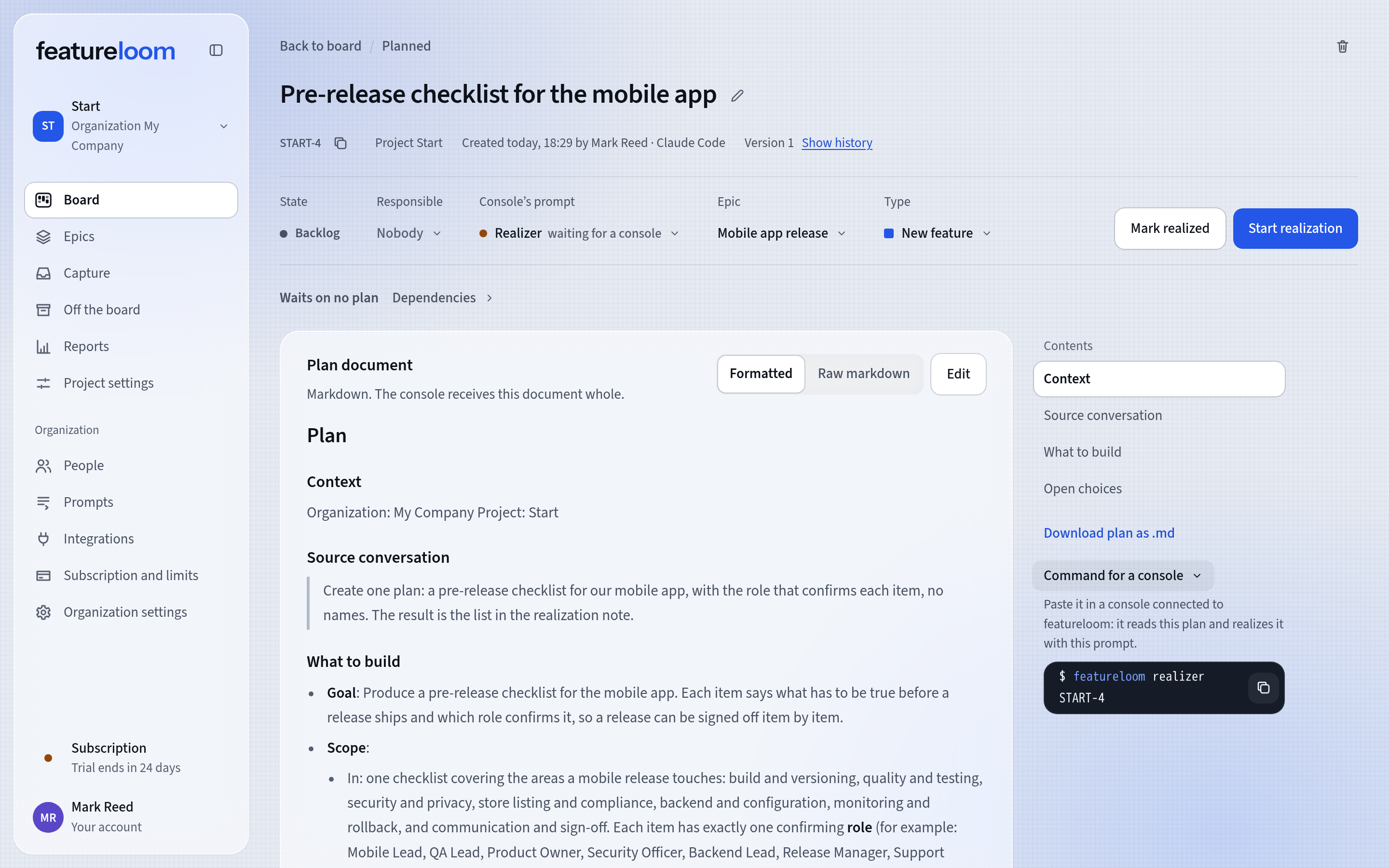
The specification
Your spec becomes plans in your team’s template.
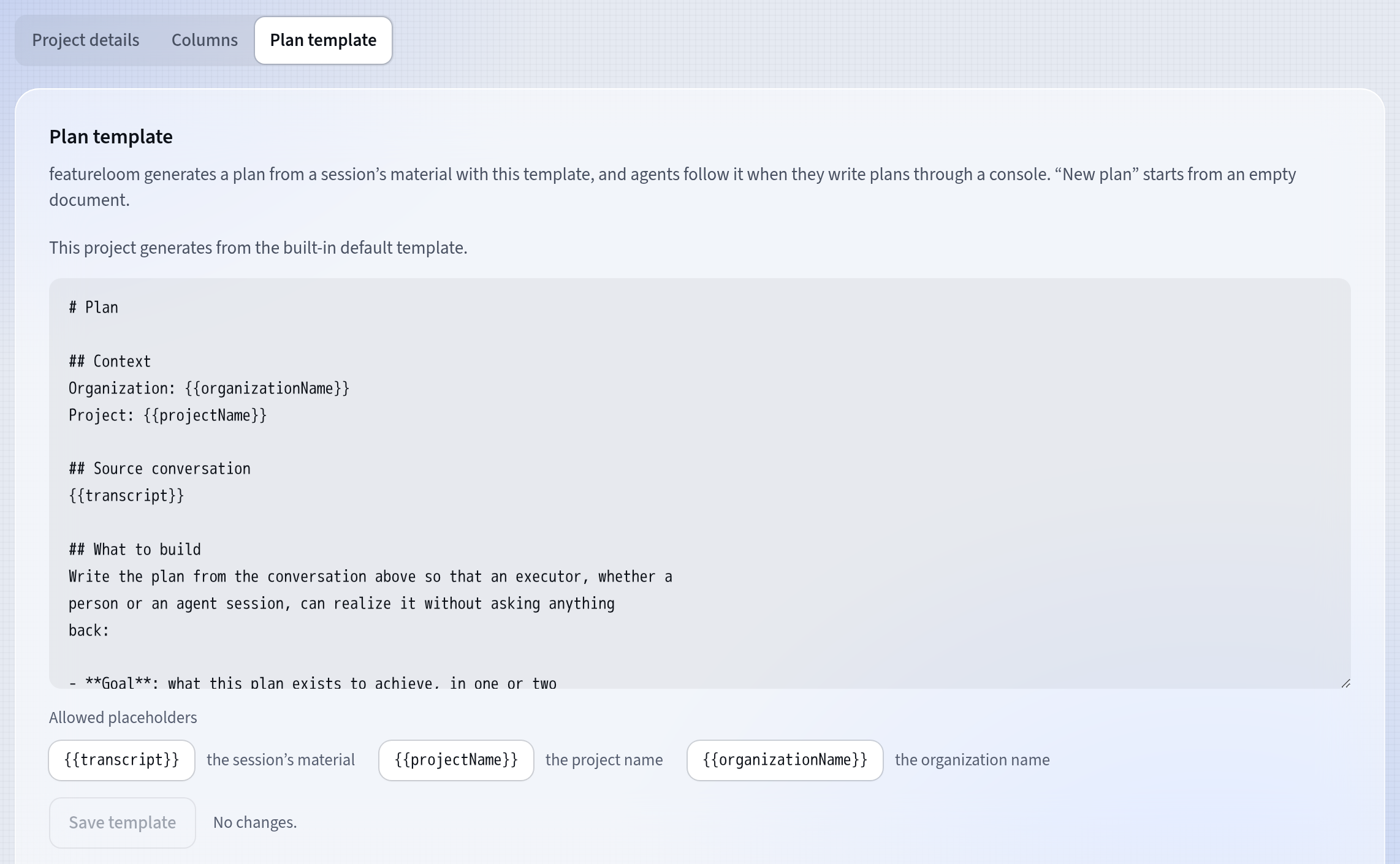
A template gives every spec the same shape
Each project has a plan template. The built-in one asks for the goal, the scope with what is left out of it, the steps, acceptance criteria and a definition of done. Acceptance criteria are verifiable statements that must hold when the work is done. You change the template on the Project settings screen, in the Plan template tab, and agents follow it when they write plans through a console.
- A plan generated in the app follows the same template
- The Planner prompt tells the agent to write every plan in the template’s sections
- A person changes the template, never a console
Claude Code turns your spec into plans
Save your specification as a file in the folder where you start Claude Code and send the command with the Planner prompt. The prompt tells the agent to read the project’s template, check which plans and epics are already on the board, create an epic for a topic that has none and write the plans in the template’s sections. Each plan should be one piece of work with acceptance criteria that one agent session delivers whole.
- The agent records the order as dependencies: which plan waits on which
- Where the spec leaves a choice open, the prompt tells the agent to name it in the plan with a recommendation
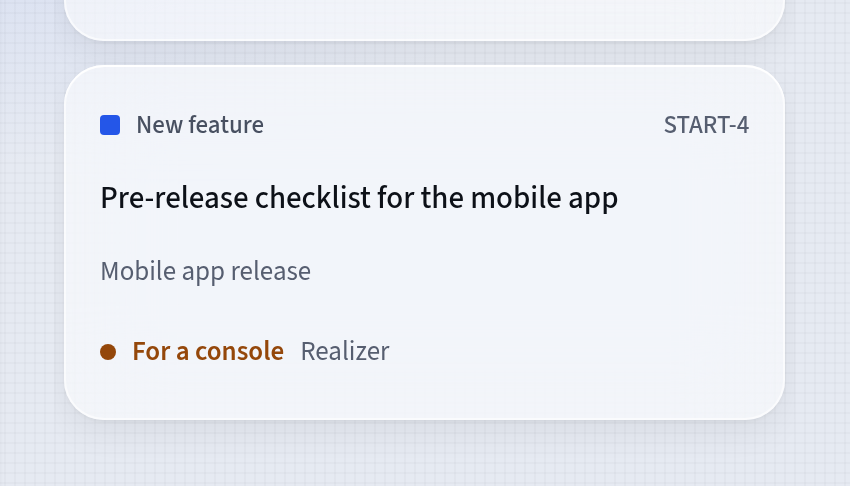
- New plans land in the column marked backlog, and you change any of them with Edit
How you start
From a spec to accepted work in three steps.
Fit the plan template
Open Project settings and the Plan template tab. Keep the built-in template or add the sections your team’s specifications need, and press Save template.
Hand Claude Code your spec
Start Claude Code in the folder with your spec file and send the command with the Planner prompt. Then name the file and the project: the agent writes the plans on your board.
Deliver plan by plan and accept
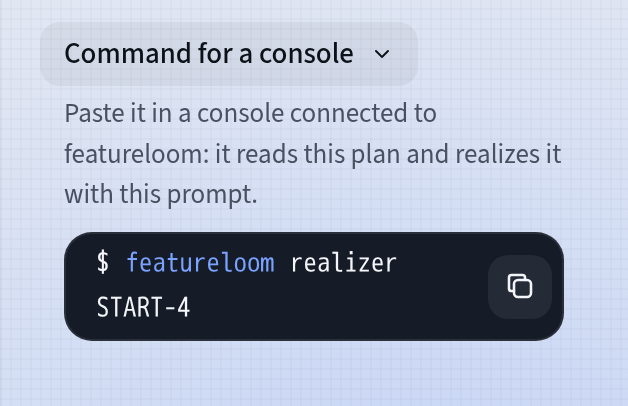
Copy the command from a plan, in Command for a console, and paste it into Claude Code. When the agent reports the plan, press Accept or Do not accept in the Acceptance section.
Before you start, connect Claude Code: in the app, open Integrations, press Connect console on the Your consoles card and choose Claude Code.
Tutorial: Connect Claude Code with one commandDelivery and acceptance
Claude Code works from the plan. You check the result against it.
The whole plan in one call
The command from a plan, such as featureloom realizer INV-14, gives Claude Code in one call the Realizer prompt, the whole plan document and the documents of the delivered plans it directly depends on. The prompt tells the agent to do what the plan asks and nothing more, and to ask instead of guessing when the plan leaves something open.
- The agent’s question and your answer stay in the plan document
- Columns, order and acceptance stay with the people of the organization
- Each save that changes the text is a new version, and a plan keeps its last 100
Acceptance against the spec
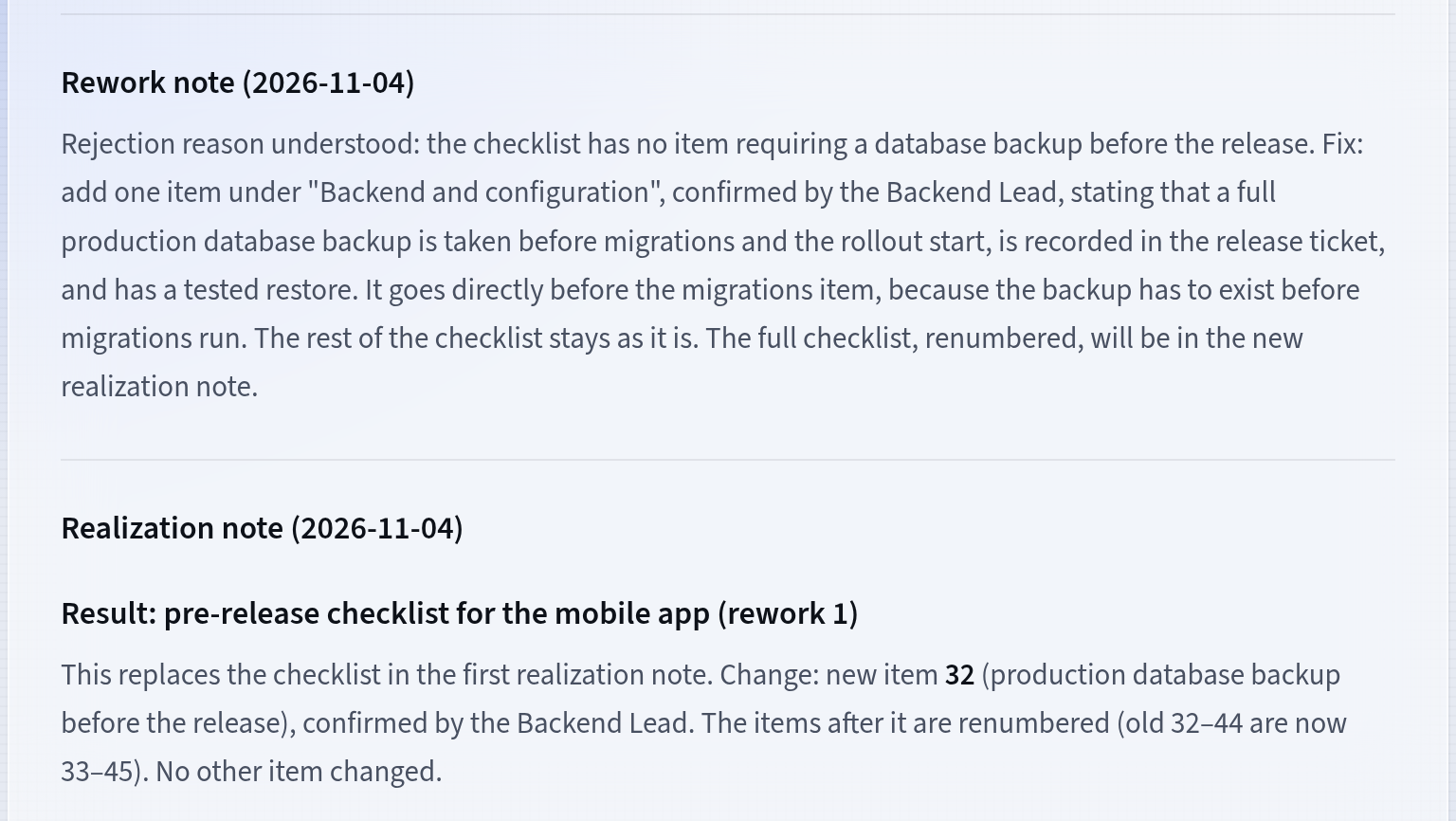
At the end the agent reports the plan with a Realization note: what was done, what differs from the plan and why, and what was not done. You compare the result with the plan’s acceptance criteria and press Accept or Do not accept, with or without reasons. When you paste the same command again after Do not accept, the agent reads your reasons, takes the plan back for rework and adds a Rework note.
- The verdict stays in the plan with the reasons, the date and the person who decided
- The server refuses a verdict sent from a console
- Reports show what was delivered and accepted, week by week
Questions about spec-driven development with Claude Code
What is spec-driven development with Claude Code?
It is a way of working in which the specification is written before the code, Claude Code works from it, and the result is checked against the same specification. In featureloom the specification is a plan on the board: Claude Code gets it whole with one command, and a person accepts the work in the app.
Do I have to write the spec in featureloom?
No. You can hand Claude Code a file you already have, such as a specification or a PRD, and send the command with the Planner prompt: the agent writes plans from it in the template’s sections. Without an agent, the app generates a plan from pasted text or a PDF or Word document. You change any plan, including one an agent wrote, with the Edit button above the document.
What if the spec leaves something open?
The Planner prompt tells the agent to name such a choice in the plan, with a recommendation. During delivery the Realizer prompt tells it to ask instead of guessing: the question lands in the plan document, and you answer it on the plan’s screen.
From your spec to accepted work, plan by plan.
30 days free, no payment card needed.